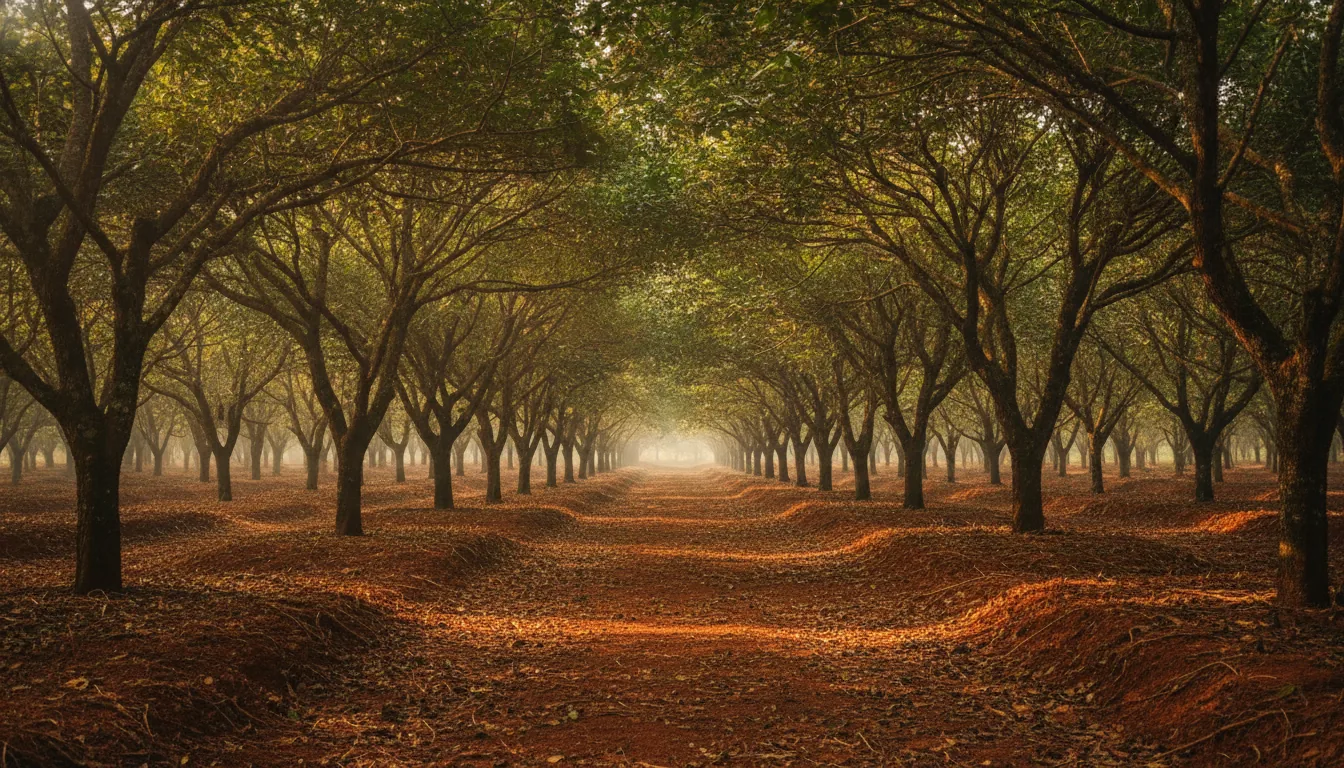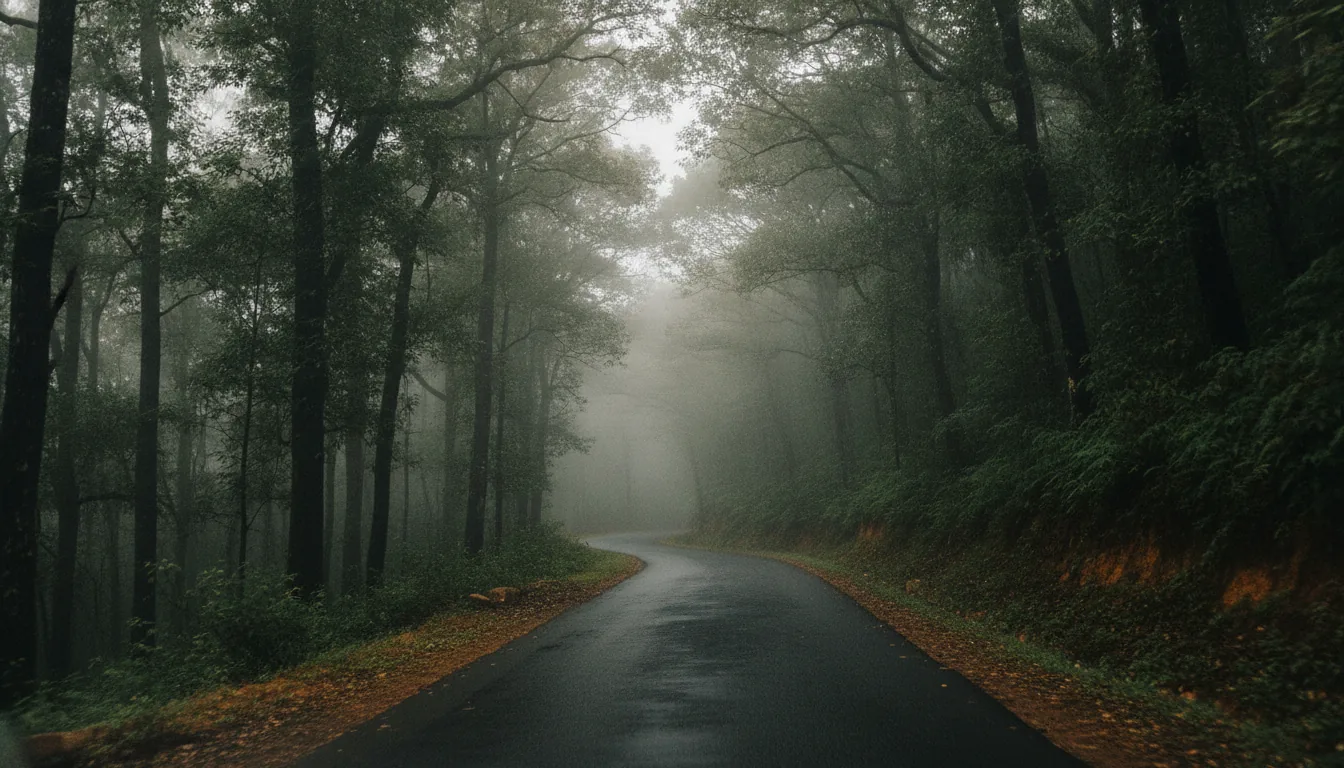
Farmland in Sakleshpur grows what the plains near Bangalore cannot: perennial plantation crops such as coffee, pepper, cardamom and areca. The rain and elevation make that possible. The land sits at about 900 to 1,100 metres in the Western Ghats and gets 1,000 to 2,500 mm of rain a year, in the Coffee Board of India’s figures for the region, while a plains taluk near Bangalore gets about 750 mm.
The price of that rain is distance. It means a four-and-a-half to six-hour drive, a monsoon that closes roads, and a working estate in Hassan district that you cannot drop in on for a morning. This guide sets out both halves, with a source and a date on every figure, so you can judge whether the land is worth it for the way your family would use it. The short verdict comes first.
Is farmland in Sakleshpur worth the drive, and for whom
Sakleshpur gives a farmland buyer what the corridors near Bangalore do not: enough rain and elevation for coffee and the spice crops grown with it. The cost is a longer drive, a hard monsoon and fewer visits. It suits a buyer who wants a working estate and an operator on site. It does not suit a family that wants a Sunday-morning plot.
The detail behind that verdict:
-
What the land supports: Perennial plantation crops. The Coffee Board lists pepper, cardamom, orange, arecanut and banana as the main crops grown with coffee in the region.
-
How the rain falls: Most of it arrives from June to October. January to March are close to dry, at 1, 2 and 6 mm a month in a modelled average table. It also varies from year to year: Hassan district ran 29% below normal from 1 to 17 June 2026.
-
Who it suits: A buyer who wants a plantation that keeps working between visits, and who will come less often but stay longer.
-
Who it does not suit: A family that will not drive four and a half hours or more each way, or a buyer who wants a plot to look in on for a morning.
The first half of that verdict rests on three numbers.
What do the rain, the elevation and the soil in Sakleshpur actually support
Sakleshpur’s farmland is shaped by three conditions: an elevation of about 900 to 1,100 metres, 1,000 to 2,500 mm of rain a year in the Coffee Board of India’s figures, and acidic, well-drained soil. Together they suit perennial plantation crops, which the drier plains cannot carry without heavy irrigation.
The numbers, with their sources:
-
Elevation. Sakleshpur town sits at 932 m. The Coffee Board puts its Manjarabad region at 900 to 1,100 m above sea level. That band straddles the Board’s ranges for Robusta coffee (500 to 1,000 m) and Arabica coffee (1,000 to 1,500 m), which is why both are grown here.
-
Rainfall. The Coffee Board gives 1,000 to 2,500 mm a year for the Manjarabad region. Arabica needs 1,600 to 2,500 mm and Robusta 1,000 to 2,000 mm, in the Board’s growing-conditions table.
-
Rainfall at the town, and across the taluk. A modelled average for Sakleshpur town is about 2,178 mm a year. It is an estimate, not an official normal. Rain varies sharply within the taluk: Hethur hobli recorded 4,305 mm in 2022, according to the state’s annual report.
-
Soil. The Coffee Board asks for soil that is “deep, fertile, rich in organic matter, well drained and slightly acidic (Ph6.0-6.5)”. In plain terms, that means soil that holds organic matter, lets water drain away, and sits a little on the acidic side. For any one plot, the only figure that counts is the estate’s own soil test.
High rainfall does not mean water all year. Almost all of Sakleshpur’s rain falls from June to October. January, February and March are close to dry in the modelled table, and that is when coffee needs its blossom showers, in March to April. When a blossom shower comes late or fails, estates switch to sprinkler irrigation, so an estate here still needs stored water or irrigation for the dry months.
The rain also swings from one year to the next. In 2026, coffee districts had unusually heavy rain in January and February, which triggered early flowering in some areas. Hassan district then recorded a 29% deficit for 1 to 17 June 2026.
The contrast with the plains is plain in the government’s own water records. Chikballapur taluk, near Bangalore, has a normal rainfall of 746 mm and lies in what the Central Ground Water Board calls “the semi-arid tracts of Karnataka”. Its groundwater was classed as “Over-Exploited” as of March 2011, with water more than 30 metres down before the monsoon. The neighbouring Gauribidanur taluk’s crop areas are led by maize, ragi and mango, and its water-intensive crops are not widely grown because of water scarcity. These figures describe the taluks, not any one estate in them. Comparing every corridor around Bangalore is a separate question; this page keeps to one contrast.
Those three conditions decide what gets planted, and when the year turns.
What grows here, and in which months does the year turn
The farmland around Sakleshpur is planted with coffee as the main crop, grown with pepper, cardamom, orange, areca and banana under shade trees, according to the Coffee Board of India’s list for the region. Taluk records name the same set, with cinnamon added.
The mix is deliberate. Coffee grows under shade, so the shade trees, such as silver oak, become part of the planting, and black pepper vines are trained up them. Arecanut, orange and banana use the same rain on different parts of the land. The coffee crop itself, its varieties and the shade system are a subject of their own; this page covers the corridor as farmland.
These are perennial crops. They take years to establish, and the land is planted for decades, not for one season. A buyer here is taking on an estate that keeps growing between visits.
The year, as an owner would see it:
-
January to March: the dry months. Irrigation carries the estate.
-
March to April: blossom showers, which set the coffee crop.
-
April to May: pre-monsoon showers, 73 mm and 117 mm in the modelled table.
-
June to September: the monsoon, with July the wettest month.
-
November to January: the Arabica coffee harvest, with Robusta running into February and early March.
Black pepper and the other intercrops have their own harvest months.
The harvest is when an estate is busiest and easiest to see at work. The same rain and remoteness that grow these crops are also what put the land so far from the city.
What does the distance from Bangalore really cost an owner
The distance from Bangalore costs an owner more than fuel. It means fewer visits, less direct oversight of the land, dependence on the people on site, and a few risks the plains do not have, from wild elephants to slow help in an emergency.
What the distance costs, one item at a time:
-
Time: Sakleshpur is about 220 to 240 km from Bangalore on NH 75, through Nelamangala, Kunigal, Channarayapatna and Hassan. By car that is usually four and a half to six hours each way. Trains from KSR Bengaluru and Yesvantpur take about four to five hours. Most owners visit less often and stay longer.
-
Supervision: You cannot see the land week to week, so you depend on the operator’s people on site more here than you would on a plot an hour from home. Who is on the estate, and what they send you, matters more than the brochure.
-
Labour: Estate work and the coffee harvest depend on resident and seasonal workers, and pickers are in demand at the same time across the region. Larger estates also carry duties under the Plantations Labour Act, 1951.
-
Wild elephants: Elephants move through the coffee estates of Hassan district. In March 2025, a woman working on a coffee estate at Bommanahalli in Belur taluk was killed by a wild elephant. Villagers reported four deaths in the district over two months, and the Forest Minister ordered an Elephant Task Force office for Belur taluk. In June 2025, a wild elephant and its calf were electrocuted on a coffee estate in Sakleshpur taluk after a live wire snapped in heavy rain.
-
Isolation: Mobile network, power and medical help are farther away than in the city. Hassan is the nearest large town on the Bangalore side.
Each of these costs is real. None of them is a reason to avoid the corridor for a buyer who plans for it: who runs the estate, how you hear from them, and how you would reach the land in a hurry. The monsoon sharpens every one of these costs.
What does the monsoon do to access and to how often you can use the land
The monsoon in Sakleshpur brings most of the year’s rain from June to September, and July is the wettest month. The ghat road beyond the town has closed after landslides in recent years.
The monsoon months, in practice:
-
The rain: The modelled averages give 320 mm in June, 835 mm in July, 431 mm in August and 144 mm in September.
-
The ghat road: NH 75 has a landslide record in its ghat section. At Doddathappale near Sakleshpur, a slide on 30 July 2024 was the third that month, and ghat traffic had been limited to 6 am to 6 pm after the slide of 18 July 2024. In August 2025, landslips on the Shiradi Ghat stretch near Maranahalli forced a complete shutdown of traffic and Bengaluru-bound trains were rerouted.
-
The route: The Shiradi Ghat lies west of Sakleshpur town, on the road to Mangaluru. A driver from Bengaluru reaches the town before the ghat section, so the slides mostly affect the road beyond it. Whether an estate sits before or after the ghat changes what a July trip looks like.
-
On the estate: Expect leeches on trails, fog, slippery paths and slow interior roads.
The estate keeps working through the rain, but most families visit in the dry months, and the harvest months are the best time to see the land at work. Before a July or August trip, check the NH 75 advisory. And before you decide, see the estate in the rain at least once. Sakleshpur in monsoon is the version of the land you would own for four months of every year.
The roads are one local pattern. The land’s paperwork has patterns of its own.
What should you know about land and title in Sakleshpur taluk before you buy
Land in Sakleshpur taluk has paperwork that differs from plains farmland. Much of it is plantation land, a separate category in Karnataka land law. It sits in a district named in the draft Western Ghats Ecologically Sensitive Area notification, and estate boundaries here need checking against the record. Your own advocate should run these checks before you sign.
Patterns to check in this taluk:
-
Plantation land is its own category: The Karnataka High Court has held that, under the Karnataka Land Reforms Act and Land Revenue Act, “plantation crops and plantation land refer to only cardamom, coffee, pepper, rubber and tea”. Section 104 of the Karnataka Land Reforms Act, 1961 makes certain provisions of that Act inapplicable to plantations. Some rules for a coffee and pepper plot may differ from those for plains farmland, so ask your advocate what that status means for the plot you are buying.
-
The boundary on the ground must match the RTC: Growers in the region have long worked small patches of government land alongside their own. The Karnataka Assembly has debated leasing such land to growers, and a 30-year lease proposed by the Sakleshpur MLA was never implemented. What a seller farms is not always what the RTC says the seller owns. Have the boundary checked against the record.
-
A managed plot is a sub-division: It is a piece of a larger survey number, so the split should show on the survey record (the podi, the hissa number and the 11E sketch), not only in a document.
-
The Western Ghats ESA draft: On 27 July 2026 the Ministry of Environment, Forest and Climate Change issued the seventh draft notification for the Western Ghats Ecologically Sensitive Area. It covers 20,668 sq km of Karnataka across ten districts, Hassan district among them. It is a draft in dispute, not law. On 22 September 2026 the Karnataka Assembly resolved to reject the Kasturirangan report “in its present form”, and the final boundary is unsettled. Inclusion is decided village by village, so ask your advocate to check the plot’s village and survey number against the draft list.
-
The ordinary title checks still apply in full: The checks above are added to the standard due-diligence list, not a replacement for it. Eligibility also matters: an NRI cannot buy this land (see the answers below).
That is what to ask of any seller in the taluk, including us.
What does Vibez Estates operate in Sakleshpur
Vibez Estates runs two estates in Sakleshpur today: a completed 35-acre coffee estate and an ongoing managed coffee and pepper estate. On both, title is registered in each buyer’s name and the farming is run under a separate maintenance agreement.
What is on record:
-
The company: Vibez Estates has been operating since 2009, with 25+ projects completed and 1,000+ customers, as at September 2026.
-
Vibez Coffee Estate: Completed, 35 acres, in Sakleshpur.
-
Vibez Manor: A managed coffee and pepper estate with 6,500 sq ft plots and cottages.
-
What you own: Freehold title, registered directly in your name, with a separate maintenance agreement for operations. Owners hold the title. We handle planting, harvest and sale.
What we have not yet published, and will before we ask you to decide:
-
The crop mix and planting year on each Sakleshpur estate.
-
Vibez Manor’s size and status.
-
The villages our Sakleshpur estates sit in, checked against the 27 July 2026 ESA draft list.
-
A measured drive time from Bengaluru to the estate.
The fairest test of any operator is a visit you plan yourself. Ask to walk the completed estate, and ask to speak to an owner the sales team did not choose.
These are the questions buyers ask most about the corridor.